Show
Friday
Cancelled - The Walls Have Eyes (but so do we)
Fri 7:00pm - 7:45pm in St Lawrence Church Community HallJo Feijó and Frankie Insley
Sadly cancelled due to illness.
To kick off the festival we are delighted to announce our pre-dancing special show, ‘The Walls Have Eyes (but so do we)’: a folk puppetry show.
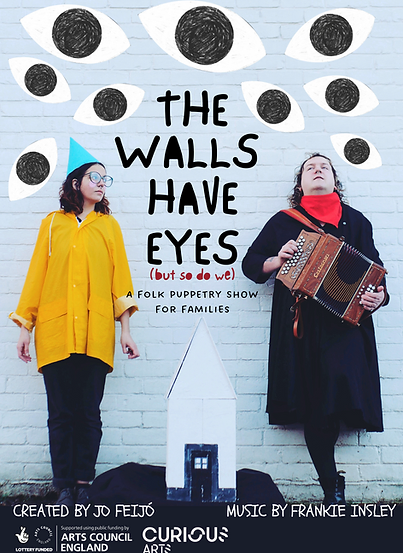
Inspired by true stories of the Portuguese fascists dictatorship, ‘the walls have eyes’ is a family visual puppetry show about self expression, innocence, bravery and what it takes to create change. Set against a backdrop of surveillance and censorship, watch a young girl as she discovers the true scope of the dangers that surround her and finds freedom within community. Written and performed by Jo Feijó, accompanied by the live folk of Frankie Insley, this show is an empowering watch for the whole family, reminding us of the importance of caring for one another through hard times and how only true inter dependance can allow for meaningful transformation.
Age recommendation: 8+
This will kick of the festival at 7pm in St Lawrence Church Community Hall, YO10 3WP.
This will be stewarded but not ticketed so you can go straight there before collecting your wristband from campus.
Dances
Friday
Contra
Fri 8:30pm - 11:30pm in RKCContrary Faeries with caller Charlie Turner

Contrary Faeries arise from Sheffield to delight, entrance, and enthrall! Sol Loreto-Miller (they/she) on piano and Joshua Rowe (they/them) on fiddle will whisk you away to a world where you can dance forever and forget your troubles, your home, and the life you lived before.
Charlie Turner has been dancing and teaching for as long as she can remember, but a move to San Francisco transformed her contra dancing and started her calling. Now based in Cambridge, UK, she brings the best of the West Coast to contra crowds, with clear, friendly teaching and satisfying dance selections. She emphasises connection, fun, flow and inclusivity in dance.
Ceilidh
Fri 9:00pm - 12:00am in Vanbrugh DiningFiddlersWreck with caller Michael Jary
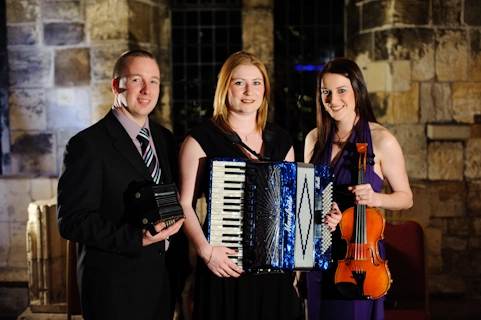


FiddlersWreck Ceilidh Band are a York based band that have been playing lively music for dancing to for 18 years. Marie Wood (accordion), Nicky Kerslake (fiddle) and Michael Jary (concertina) play a mixture of English, Northumbrian, Scottish and Irish music to fit to Michael’s broad selection of dances suitable for ceilidh novices and more experienced dancers alike.
Bal
Fri 10:45pm - Late in D-BarPortmanteau
Traditional Balfolk dance tunes with a touch of modernity. Portmanteau’s blend of acoustic instruments and subtle synthesizers creates a captivating musical experience that honors tradition while embracing the future.
Late Night Dancing
Sat 12:00am - Late in RKCYou
Dance the night away. Anyone can call, anyone can play, anything can be danced.
Saturday
Playford
Sat 2:00pm - 4:30pm in RKCMatt Norman and Ali Messer with caller Lauren Catlin
Enjoy an afternoon of dancing from the 17th and 18th century, based around the dances published by John Playford, danced as they should be danced - fun, with lots of energy and to wonderful music.

Matt and Ali are familiar faces on the social dance scene. They are both multi instrumentalists combining accordion, piano, fiddle and mandolin to create music full of inventiveness and energy guaranteed to get people up and dancing. Expect highs and lows with driving rhythms, beautiful textures and the odd funky bass line.
Lauren Catlin is a caller and dancer based in Nottingham with experience in calling for all ages and abilities. A trainee history teacher in her non-folk life, she enjoys tunes and music from the past and how they have been interpreted and adapted for new audiences. She is a regular caller at Nottingham Folk Dance Group, and has also called at Loughborough Folk Dance Club, the Round’s Playford Ball, and a variety of online events.
Display Ceilidh
Sat 4:00pm - 6:30pm in Vanbrugh DiningThe Shamrock Experience with caller Ben Couper
A ceilidh with a difference, between the normal ceilidh dances there will be lots of display spots where you can come and show off the display dance your university society has put together. From amazingly sublime dances to sublimely silly dances (think Lord of the Rings themed Postie’s Jig or Scottish meets Monty Python).
The Shamrock Experience is a three piece folk fusion ceilidh band that blends folk reels and jigs with a combination of styles that drives rhythm at the heart of their sound. Formed in 2006, The Shamrock Experience has played for many events around the UK including The Llangollen International Music Festival, BBC Countryfile, and Channel 5 Celebs On The Farm. The band explores folk melodies combined with improvisation, effects and styles to captivate audiences with instructed dances adapted to suit from beginners onwards. The band has also recently run ceilidhs for the York University Folk Society.
Scottish Country Dance
Sat 5:00pm - 7:30pm in D-BarWeaver and Wood with callers Lucy Munro and Stephen Mitchell
Dance programme
| Joie de Vivre | 8x32J | 3 Couple (4 Couple Set) |
| The Australian Ladies | 8x32R | 3 Couple (4 Couple Set) |
| The Poet and His Lass | 3x32S | 3 Couple |
| Ian Powrie's Farewell to Auchterarder | 128J | Square |
| The Deil Amang the Tailors | 8x32R | 3 Couple (4 Couple Set) |
| Hyacinths to Haddo House | 2x32S+2x32R | Square |
| Hooper's Jig | 8x32J | 3 Couple (4 Couple Set) |
Break
| The Dunedin Festival Dance | 6x32R | Round the Room |
| Johnnie Walker | 64S+64J | Square |
| Duke of Perth | 8x32R | 3 Couple (4 Couple Set) |
| The Bees of Maggieknockater | 4x32J | 4 Couple Set |
| Snowdrops | 3x32S | 3 Couple |
| The Eightsome Reel | 40+8x48+40R | Square |
| The Highland Rambler | 8x40R | 3 Couple (4 Couple Set) |
Extras
| Posties Jig | 4x32J | 4 Couple Set |
| A Trip to Bavaria | 4x32R | 4 Couple Set |
| Good for Beginners | Intermediate | Exciting! |
We are Weaver and Wood, a duo specialising in folk improvisation inspired by both current and historical traditions. We formed through our desire to celebrate the energy and vibrancy that improvisation can bring to live performance. Our music ranges from contemporary folk arrangements of traditional tunes, improvisation on Medieval chants, and exploring the improvisatory possibilities of our own compositions.
Lucy and Stephen are experienced callers and teachers of Scottish Country Dancing and Ceilidhs based in Edinburgh, having called and taught on the East coast of Scotland for university groups and others. They have performed Scottish Country and Highland dances across Europe as participants of folk festivals. They are frequent attendees of IVFDF as both dancers and workshop leaders and are looking forward to their first time calling an evening dance at the festival!
Ceilidh
Sat 7:00pm - 10:00pm in RKCBlackbeard's Tea Party with caller Gordon Potts
We couldn’t host IVFDF in York without an appearance from Blackbeard’s Tea Party - they were formed in the city in 2009 and have gone on to become one of the most in-demand ceilidh bands in the country. They’ve played memorable ceilidhs at Cambridge Folk Festival, Towersey Festival, Sidmouth Folk Week and many others. Their arrangements of folk tunes have a rock edge, heavy riffs, playful arrangements and driving dance rhythms.
Over the years, caller Gordon Potts has been their frequent partner in crime. One of the most experienced ceilidh callers around, Potts is a true party starter with the perfect repertoire of dances to match Blackbeard’s Tea Party’s energy.
Bal
Sat 8:30pm - 11:00pm in D-BarEmily Bowden and Simon Dumpleton
Emily Bowden (fiddle) and Simon Dumpleton (chromatic accordion) have been touring together on the Balfolk scene for the last 8 years, both as a duo and, with the Belgian guitarist Simon Laffineur, as Emily & The Simons. Emily’s fiddle playing is sublime and the melodies soar over driving foot-tapping rhythms and chords from Simon’s accordion. Much of their music is adapted from the trio’s set; tender, soulful mazurkas, joyful, exuberant bourrées and everything in between. The duo formation also allows them to include additional material not heard at the trio gigs.
Techno Contra
Sat 9:00pm - 12:00am in Vanbrugh DiningBearded Dragons with caller Sam Tetley Smith
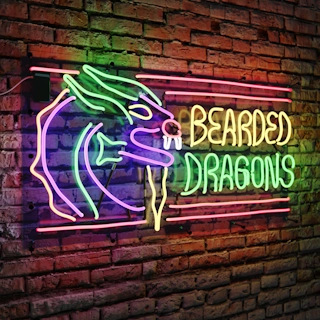
The inimitable Benjamin Rowe and Vic Smith, masters of the traditional and the intangible, provide a unique and highly danceable musical experience.
From fire and darkness rise the mighty Bearded Dragons. Blending traditional and electronic styles, they are pioneers of Techno Contra, Techno Playford, and Electro Folk in general, at the very cutting edge of folk dance music. They are fiddle playing behemoth Benjamin Rowe (also found rampaging in Contrasaurus), and bellows, keys and synths monster Vic Smith (known also in Double Dichotomy, Fat Harry, and Ceilidh Experiment). Using both traditional instruments and sounds, with live hardware synthesisers, Bearded Dragons weave a musical experience that is entirely unique.
Sam Tetley Smith is a Sheffield-based contra caller and general folk-dance nerd. Expect dances with lots of opportunity to get lost in the music without too much chance of getting lost in the room.
Late Night Dancing
Sun 12:00am - Late in RKCYou
Dance the night away. Anyone can call, anyone can play, anything can be danced.
Sunday
Constant Contra
Sun 11:30am - 1:00pm in Vanbrugh DiningCavalcade of Callers
Just Keep Dancing! Allow a cavalcade of IVFDF’s finest contra dance callers to guide you through a constant stream of contra dance – no walkthroughs and no interruptions! If you want a break or to ask somebody else to dance, just stop dancing at the end of the set and join back in when you’re ready. Suitable for dancers comfortable with common contra figures.
Ad hoc Social Swing Dance
Sun 12:45pm - 1:45pm in D-BarYou
A chance to swing dance the lunchtime away. Put into practice all the skills you’ve learnt in the Blues and Charleston workshops.
Survivors' Ceilidh
Sun 2:30pm - 5:00pm in RKCYou calling and playing. MC - Paul Martin
Celebrate the end of another fantastic IVFDF by calling, playing and/or dancing at our survivors’ ceilidh!
There will be a sign up sheet for calling at the front desk and Harry Pollard + Matt Norman will be leading the IVFDF Scratch Band (Scratch band rehearsals are on Saturday and Sunday mornings).
Workshops
Friday
Introduction to Bal
Fri 10:00pm - 10:30pm in D-BarRaffy Harvey
Come along and learn the basics of Balfolk in preparation for this evening’s Bal.
Saturday
Beginners Scottish Country Dancing
Sat 9:00am - 10:00am in D-BarLucy Munro and Stephen Mitchell
Come learn the basics of Scottish Country Dancing in this beginner friendly workshop. We’ll cover popular figures which will prepare you for the evening dance.
Wear soft shoes if possible.
Border Morris
Sat 9:00am - 10:00am in AEW/003Chris Broan
It’s the 18th or 19th century, it’s winter, and it’s cold. The agricultural workers in the Welsh Marshes have no work and no money left, so they disguise themselves by pinning odd rags on their normal clothes, smearing their faces with soot from the fire and going to the houses of the local gentry. You could describe what they did there as dancing with noise, energy and big sticks out of the hedgerows. You could also describe it as begging with menaces (and very big sticks). They were perpetrating Border Morris.
Border morris usually involves quite simple, but vigorous, stepping, typically a step-hop. A few traditional dances were recorded but, since the revival in the 1970s, many more new dances have been written in the style (or, at least, our best guess as to the style…). We will be looking at one of the newer dances. If there is sufficient interest, it may be possible to dance it as a workshop display in the Display Ceilidh on Saturday afternoon. Please bring energy, enthusiasm and shock-absorbing footwear! Also, if there are any morris sides able to lend us some extra 75cm (approx!) sticks that would be much appreciated…
An Introduction to Contra
Sat 9:00am - 10:00am in RKCJack Kanutin
Whether you have been folk dancing for years, or this is your first time, this introduction to contra dancing will help prepare you for the rest of your weekend. We’ll be looking at the basic moves and structure of contra by learning some simple dances. If you aren’t new to contra and you want to come along anyway, that’s absolutely fine - the best way to learn after all is to dance with experienced dancers!
Scratch Band (Part 1)
Sat 9:00am - 10:00am in Music 058Harry Pollard and Matt Norman
Run through the tunes which will be used in the survivors ceilidh. A great chance to play for a ceilidh if you have always wanted to but haven’t had the chance or just play through some tunes with people. Come to one or both of the workshops.
If you want to look at the tunes beforehand you can find the tune book here.
Song Session
Sat 9:00am - 10:00am in G/N/020Tom Frangleton
Absolute Beginners Whistle with a Side Order of Percussion
Sat 10:15am - 11:15am in Music 058Pete Grassby
Whistles and simple sheet music will be provided. Includes a swift demo of bodhran and bones technique.
Dartmoor Step Dance
Sat 10:15am - 11:15am in AEW/003Matt Norman and Beth Frangleton
Learn the basic steps of the Dartmoor Step Dance with a few twiddles thrown in. Works best with hard soled shoes or taps.
Improvised Bourrée Singing
Sat 10:15am - 11:15am in G/N/020Greg Dyke
Using ever-changing nonsense lyrics to sing Bourrees from Auvergne.
Javanese Gamelan
Sat 10:15am - 11:15am in Gamelan RoomHarry Pollard
An introduction to Javanese Gamelan music, using the university’s own gamelan ‘Sekar Petak’.
Kentucky Running Set
Sat 10:15am - 11:15am in RKCAnnabel Sharp
Kentucky Running Set is a form of American Square Dance, collected by Cecil Sharp and Maud Karpeles in the Appalachians in the early 20th century. It is danced briskly and is made up of choruses, whole-set and visiting figures, strung together as the dancers “run a set”.
Ronds and Rondeuxs
Sat 10:15am - 11:15am in D-BarIsobel Priest
Fancy learning some more unusual bal dances? This workshop will look at rondeauxs, which are joyful bouncy dances from Gascony done in a line (en chaine) or in a pair (en couple), including fun variations for the couple version. It will also introduce a couple of unusual ronde dances that are done as a group, and how to get good connection in that circle. Specific dances will be taught from scratch, some balfolk experience is useful as the pace will be fast.
Leading and Following Distilled
Sat 11:30am - 12:30pm in Vanbrugh DiningLindsey Kennedy and Jos Style
Focusing on connection and communication in dance, the aim of the workshop is to add some new skills to your dancing toolbox that will unlock the next step for you - whether this is steering confidently, leading your first variation, or enacting the most classy foot slides to be seen this year. Expect some fun exercises that you wouldn’t normally see on a dance floor and experience of both the lead and follow role. The principles are relevant to almost any partnered dance (Bal, Waltz, Swing, Blues, Tango, and even Contra variations), but the music will have a balfolk flavour. Open to all dancers from beginners to experts, there’ll be something to develop your own technique.
Left/Right Confusion in Dancing
Sat 11:30am - 12:30pm in G/N/020Steve Harris
Left/Right confusion is a little understood issue that affects many dancers. Aim to explore the issue by discussion and by small scale experimentation on a dancefloor. More info at https://steveharris.uk/lrc/
Cotswold Morris
Sat 11:30am - 12:30pm in AEW/003Acorn Morris
Come and learn some Cotswold dances with Acorn Morris.
Bring large hankies if you have them!
The Playford Story
Sat 11:30am - 12:30pm in RKCAnn Hinchliffe
“Mr Playford! Loving your dance books. Where do the dances come from?” “Oh, some from my grandparents, some from Inns of Court fellows. With King Charles back from France, I’m adding some French-style steps. Most fashionable.” Led by researcher Ann Hinchliffe, dance the way Playford did!
UCL Caledonian Society Presents Reeling
Sat 11:30am - 12:30pm in D-BarUniversity College London Caledonian Society
Fancy trying out a bit of Scottish country dancing? Whether you are a regular at local ceilidhs or have never heard of reeling before, we would love for you to come along and give our beginner-friendly workshop a go!
Reeling is a social form of dancing made popular in the 18th century by lairds who held formal balls in their castles. Our society focuses on the social side of this dance and ensures everyone will leave wanting to reel again! It is a very beginner-friendly form of dance and we have newcomers weekly at our regular society sessions. Most of the dances use repeat patterns of basic moves (setting, turning, casting off and figure of eights) which is part of why it is so accessible! However it also has more complex moves such as tullock turns and even sometimes the helicopter (yes it is as crazy as it sounds!). There are over 11,000 reels that exist nowadays although don’t fret, we’ll only be teaching a few!
Who are we? We are UCL Caledonian Society, a university run society operating at University College London. We hold weekly sessions where we teach both regulars and newcomers alike! We also hold two yearly formal balls (winter ball and summer ball) with a live band, which anyone is welcome to, normally located on the UCL campus! To keep updated with any of our events check out our instagram: @uclcalsoc .
Squeezebox from Scratch - Absolute Beginners D/G Melodeon
Sat 11:30am - 1:00pm in Music 058Ed Rennie and Helena Painting
The workshops aim to give the participants a basis of good techniques from the start which will pay dividends in the longer term. The step by step teaching method combined with the tablature means by the end of the workshop they will have played at least one tune and have the tools to play further tunes, even if they cannot read music yet. We say yet because many, by using the tablature, have found they have inadvertently learned that skill as a by-product. We have a bank of 17 good quality Hohner melodeons which can be used by the budding musicians who would like to try out but don’t have access to an instrument. The workshops have a limit of 20 places, to include anyone who may have brought or borrowed an instrument. There is a repeat of this workshop on Sunday to hopefully allow anyone who wants a try to have a chance.
Blues Dance Taster
Sat 12:45pm - 1:45pm in RKCKaty and Greg
We’ll give you a taste of Blues partner dance, music and values
Breton Dance
Sat 12:45pm - 1:45pm in D-BarJean-Christophe Denis
Do you feel sad that you don’t have the chance to exercise your pinkies at IVFDF? Come to this workshop, pinkies workout is guaranteed! We will travel and dance around Brittany, from joyful couple dances from the coast to energetic chain dances from the “mountains”. We will move from the French-speaking areas to discover the Breton and Gallo speaking counties. You will dance on traditional but also “contemporary traditional” music. Open to all. Cider not provided, but French accent is!
Calling
Sat 12:45pm - 1:45pm in G/N/020Rhodri Davies
Ever wanted to try your hand at calling or want some hints for improving or a knotty calling problem? If so, come along to this session with veteran caller Rhodri Davies. The intention is to make this a practical session with the chance to try things out, but we will adapt to the interests of those who attend.
Gary Roodman Dances
Sat 12:45pm - 1:45pm in AEW/003Burt Hunter
Gary Roodman is a statistician from New England currently living in Missouri. He has been writing dances for over 40 years, many of them in what he calls ‘English historical style’, what we rather lazily refer to as ‘Playford’. He is unusual in that he usually starts with a tune that he likes then writes a dance to fit, rather than the other way round as most dance composers do. He is very eclectic in his choice of music which makes it challenging for a live band as the range includes folk, classical and jazz. (I will be using recorded music). His dances have a flow which makes them satisfying to perform.
This workshop might prove challenging for those unused to Playford style dances but I will guide you through the intricacies of leading up a double, siding, arming, setting and turning single and other beautiful figures. Gary classifies his dances according to the ‘Expected degree of teaching difficulty’ from one to five. This workshop will include dances of varying degrees of challenge including one at level five if people are up for it.
Sunday
Javanese Gamelan
Sun 8:00am - 9:00am in Music E/050 Gamelan RoomHarry Pollard
An introduction to Javanese Gamelan music, using the university’s own gamelan ‘Sekar Petak’. A repeat of the workshop from Saturday.
American Squares Positionally
Sun 9:00am - 10:00am in Vanbrugh DiningColin Hume
Positional calling is a technique of gender-free calling which refers to the dancers only in terms of their position. It’s a very different mindset from just replacing “Men” and “Women” by “Larks” and “Robins” - it needs a new approach to both walkthrough and calling. Louise Siddons has championed this for calling contras, but as far as we know no-one has yet tried to apply it to squares. That’s about to change!
Colin will present a range of squares, some of which you will find challenging but all of which you should find fun. They are traditional-style but with interesting variations, so you need to know standard figures and be able to react quickly to the calls.
Defensive Dancing - Asserting comfortable boundaries on the dancefloor
Sun 9:00am - 10:00am in RKCDaisy Black and Sol Loreto Miller
Ever felt uncomfortable, anxious or off-balance on the dancefloor? This workshop will look at positive ways to change uncomfortable holds and movements, how to assert your personal space and how to communicate with your partner in the middle of a dance in a way that makes dancing more comfortable for both of you.
We will be discussing examples from Ceilidh, Contra, Playford and Balfolk, but the points made will be relevant to all kinds of dance involving partners.
Feel free to bring your own questions and examples to work on.
English Clog Dance
Sun 9:00am - 10:00am in D-BarJanet Rose
This is a Beginners’ workshop for dancers who haven’t tried Clog dancing. We will start by having some fun making percussive sounds with our feet. We’ll learn a Hornpipe which can be performed solo or in a group. Steven will provide the music to accompany us. I have a few pairs of spare clogs to borrow (on loan from The Glasshouse, Gateshead) or you can join in with hard soled shoes or taps.
Rhyme Time
Sun 9:00am - 10:00am in G/N/020Jen Morgan
Folkie nursery rhymes for the little ones (and those that are very young at heart). A mixture of standard nursery rhymes with a few folk songs and maybe one or two mash ups.
Scratch Band (Part 2)
Sun 9:00am - 10:00am in Music 058Harry Pollard and Matt Norman
Run through the tunes which will be used in the survivors ceilidh. A great chance to play for a ceilidh if you have always wanted to but haven’t had the chance or just play through some tunes with people. Come to one or both of the workshops.
If you want to look at the tunes beforehand you can find the tune book here.
Dancing in a time of uncertainty, English fifteenth century dances in threes.
Sun 9:15am - 10:00am in AEW/003Elizabeth Lawson
We’ll be looking a number of fifteenth century dances for three people, talking about the difficulty of interpreting the manuscript they come from and having a go. If you’ve never done fifteenth century dance come and see why I love it. If you have been to my workshops before, I will be bringing more swords this year. Please note the slightly later start time of 9.15 am
British Contra Dances
Sun 10:15am - 11:15am in RKCRhodri Davies
Contra dancing comes from the US New England, with some of its roots in English Country Dancing, but we also have modern contra choreographers from this country. Come and try one of the oldest British contra dances and contributions from more modern British authors.
Cornish Nos Lowen Dancing
Sun 10:15am - 11:15am in AEW/003Cathy Bennett
Nos Lowen (Cornish for Happy Night) is a type of social dance without a caller (quite like Bal or Breton Fez Nos). The workshop will be a chance to learn the steps to some of the dances and dance them to some cornish tunes!
Fusion Dance Intro to Free Movement
Sun 10:15am - 11:15am in D-BarMalcolm White
Fusion dance is when people from different dance backgrounds bring their own experience and connect. It is improvisation, connection and can lead to something new and beautiful.
Fusion is gradually growing into its own art form!
Maypole
Sun 10:15am - 11:15am in Vanbrugh DiningElizabeth Lawson
How to do maypole dancing - Maypole dancing is one of the few things it’s possible to become competent in during an hour’s workshop. My workshop will go through both the basic figures and also how to run a maypole session yourself.
IVFDF Reps Meeting
Sun 10:15am - 11:15am in G/N/020Come along to the IVFDF annual reps meeting if you want to learn more about how the festival is run, or you’re interested in running IVFDF yourself. We will give a break-down of 2024, have an update on 2025, vote on IVFDF 2026 and discuss any improvements for future IVFDFs. Each university society should send 2 reps to vote.
Beginners Charleston
Sun 11:30am - 12:30pm in D-BarPeter Marsh and Rosalind Williams
Continuing on from the popular lindy hop and solo jazz workshops from previous IVFDFs, Peter and Rosalind this year bring you Charleston! Charleston is a super fun and fast paced form of partnered swing dance, for boogying to old jazz hits from the roaring 20s. In this workshop we will teach you some basic steps and moves which you can take to the social dancefloor.
Intro to Slip Jigs
Sun 11:30am - 12:30pm in AEW/003Sacha Charlie
A brief introduction to slip jigs, a soft shoe style of Irish dancing. This workshop will teach basic form for soft shoe, moving with flow and grace, and a slip jig step.
Niggun Sing (Wordless song session)
Sun 11:30am - 12:30pm in G/N/020Isaac Montagu
A song session without words, a tune session without instruments. Rooted in but not limited to niggunim, wordless songs from European Jewish traditional music. No prior knowledge/experience needed.
Squeezebox from Scratch - Absolute Beginners D/G Melodeon
Sun 11:30am - 1:00pm in Music 058Ed Rennie and Helena Painting
The workshops aim to give the participants a basis of good techniques from the start which will pay dividends in the longer term. The step by step teaching method combined with the tablature means by the end of the workshop they will have played at least one tune and have the tools to play further tunes, even if they cannot read music yet. We say yet because many, by using the tablature, have found they have inadvertently learned that skill as a by-product. We have a bank of 17 good quality Hohner melodeons which can be used by the budding musicians who would like to try out but don’t have access to an instrument. The workshops have a limit of 20 places, to include anyone who may have brought or borrowed an instrument. This is a repeat of the workshop from Saturday to hopefully allow anyone who wants a try to have a chance.
Waltzing from 1 to 11
Sun 11:30am - 12:30pm in RKCAndrew Walbran
An introduction to balfolk waltzes, regular and irregular. We’ll start by getting the basics of a regular 3-time waltz, talking about how a typical balfolk style of waltz differs from other kinds of waltz, and then see how far we can get with irregular waltzes in 5, 8 or even 11.
Wear smooth-soled shoes that you can turn easily in
Congo de Captieux
Sun 12:45pm - 1:45pm in AEW/003Joséphine Maury
Congo de Captieux is a 4 person dance from the south west of France. I recommend you attend the Rondeau workshop first, but it’s not a necessity as we can use a simplified step. Please bring a scarf that you can wear around you neck or waist to help visualise how the 2 roles move around (only half of you will need it)
Friday
Cancelled - The Walls Have Eyes (but so do we)
Contra
Ceilidh
Introduction to Bal
Bal
Late Night Dancing
Saturday
Beginners Scottish Country Dancing
Border Morris
An Introduction to Contra
Scratch Band (Part 1)
Song Session
Absolute Beginners Whistle with a Side Order of Percussion
Dartmoor Step Dance
Improvised Bourrée Singing
Javanese Gamelan
Kentucky Running Set
Ronds and Rondeuxs
Leading and Following Distilled
Left/Right Confusion in Dancing
Cotswold Morris
The Playford Story
UCL Caledonian Society Presents Reeling
Squeezebox from Scratch - Absolute Beginners D/G Melodeon
Blues Dance Taster
Breton Dance
Calling
Gary Roodman Dances
Morris Tour
Playford
Display Ceilidh
Scottish Country Dance
Ceilidh
Bal
Techno Contra
Late Night Dancing
Sunday
Javanese Gamelan
American Squares Positionally
Defensive Dancing - Asserting comfortable boundaries on the dancefloor
English Clog Dance
Rhyme Time
Scratch Band (Part 2)
Dancing in a time of uncertainty, English fifteenth century dances in threes.
British Contra Dances
Cornish Nos Lowen Dancing
Fusion Dance Intro to Free Movement
Maypole
IVFDF Reps Meeting
Beginners Charleston
Constant Contra
Intro to Slip Jigs
Niggun Sing (Wordless song session)
Squeezebox from Scratch - Absolute Beginners D/G Melodeon
Waltzing from 1 to 11
Congo de Captieux
Ad hoc Social Swing Dance
Raffle
Survivors' Ceilidh
You can find us being sociable on:


Supported by: